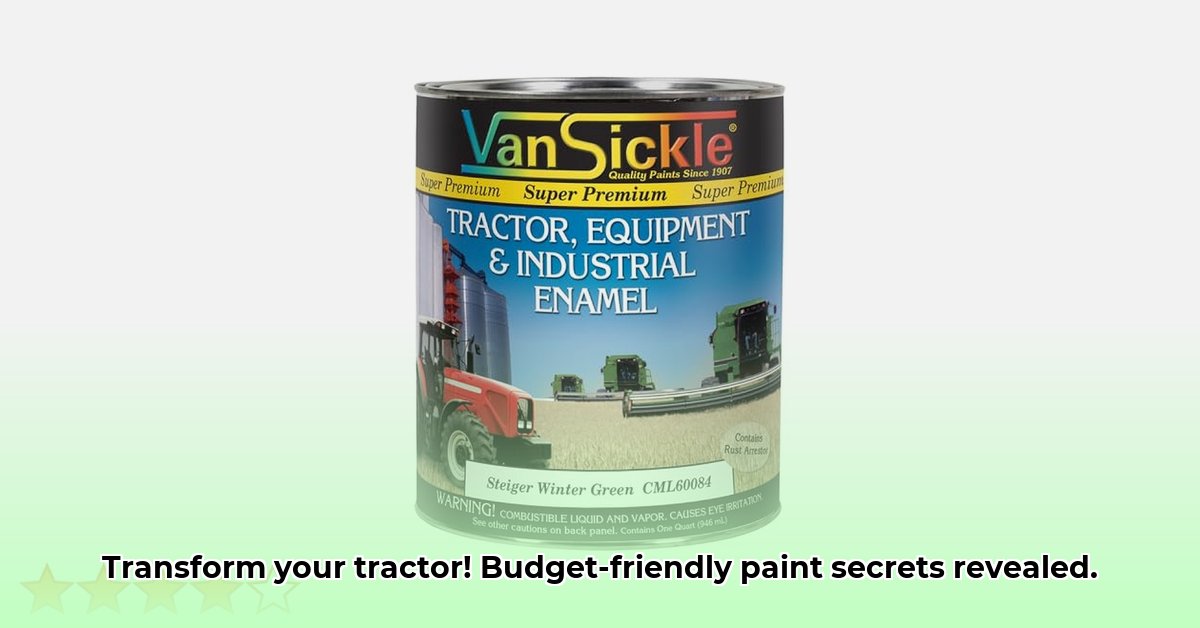
Revamping your tractor doesn't require a fortune. This guide helps you find affordable, long-lasting paint options that deliver professional results. We'll cover choosing the right paint, surface preparation, application techniques, and maintenance for a durable, eco-friendly finish. Let's get started! For even more in-depth guidance, check out this comprehensive guide.
Understanding Your Cheap Tractor Paint Options
Several paint types balance cost and performance. Each offers unique advantages and disadvantages.
Enamel Paints: These create a rock-hard, durable finish, resisting scratches and weathering. However, they typically have high VOCs (volatile organic compounds – substances harmful to the environment and health) and are difficult to clean up.
Acrylic Paints: A versatile, popular choice with good protection and lower VOCs than enamels. This makes them an eco-friendlier budget option. They are water-based, simplifying cleanup.
Alkyd Paints: These provide a balance between enamel and acrylic durability and offer a smooth finish. Cleanup is moderate, but VOC content should be considered.
Isn't it important to know the environmental impact of your paint choice? A low-VOC paint minimizes harm to both you and the environment.
Here's a comparison:
| Paint Type | Durability | VOCs | Cleanup Ease | Approximate Cost |
|---|---|---|---|---|
| Enamel | Very High | High | Difficult | Moderate |
| Acrylic | Moderate to High | Low | Easy | Moderate to Low |
| Alkyd | Moderate | Moderate | Moderate | Moderate |
Picking the Perfect Paint: A Step-by-Step Guide
Choosing the right paint involves more than cost.
Step 1: Assess Tractor Condition: Significant rust necessitates a primer; minor touch-ups require a paint with strong adhesion.
Step 2: Consider Tractor Use: Outdoors requires weather-resistant paint; indoor use allows for less weather-resistant options. Does your tractor need protection from harsh sun and rain?
Step 3: Prioritize Environmental Responsibility: Opt for low-VOC paints. Check the can for VOC levels; lower is better. Eco-friendly certifications are a plus. Did you know that some paints have a lower carbon footprint than others?
Prepping the Surface: The Foundation for a Great Finish
Proper preparation is crucial for a long-lasting paint job.
Step 1: Thorough Cleaning: Remove dirt, grime, grease, and loose rust using brushes, wire brushes, or a pressure washer (carefully!). Degreasers may be needed for stubborn grease.
Step 2: Smoothing with Sanding: Sand to create a smooth base for paint adhesion. Use different grit levels, starting coarser and finishing finer. Wear safety gear. Sanding ensures a smooth finish.
Step 3: Priming for Optimal Adhesion: Apply a primer, especially over bare metal or rust, to improve paint adhesion and appearance. Allow complete drying before painting.
Painting Techniques for a Professional Look
Correct application is as vital as preparation.
Step 1: Choose Your Application Method: Brushes offer control, rollers are faster for large areas, and spray equipment provides an even coat.
Step 2: Multiple Thin Coats: Apply thin, even coats to avoid runs and drips. Allow complete drying between coats (typically a few hours). Aim for 2-3 coats.
Step 3: Patience is Key: Allow ample drying time to ensure proper curing and durability. Don't rush the process!
Maintaining Your Paint Job for Years to Come
Proper care extends paint lifespan.
Regular Cleaning: Regularly wash your tractor to remove dirt and grime.
Waxing for Protection: An annual wax coat adds protection against the elements and prevents fading.
Prompt Touch-Ups: Address scratches or chips promptly to prevent rust.
Conclusion
Affordable, long-lasting tractor paint is achievable without compromising quality. By following these steps, you'll get a professional-looking, durable finish that protects your investment while being kind to the environment. Always consult the manufacturer's instructions for your chosen paint.